|
Szczegóły Produktu:
Zapłata:
|
| Aplikacje: | Zastosowania bezstanowe | Przemysłowy wkład prądu przemiennego: | Pojedyncza faza dla każdego prostowników |
|---|---|---|---|
| Temperatura przechowywania: | -40 do +85 | Pakiet: | kartony |
| Napięcie wejściowe: | AC 220V/380 V. | Zamek: | Trzy punktowe blokada antykradzieżowa |
| Moc wyjściowa: | 6400 W | Pojemność wejściowa: | 1 × 63a/2p |
| Czas przełączania UPS: | <12 ms podczas awarii siatki | Czas realizacji: | 8 tygodni |
| Gwarancja jakości: | 24 miesiące | Zamek szafki: | Trzy punktowe blokada antykradzieżowa |
| Podkreślić: | 3 Ports Inverter Module,DC Input Inverter Module,Intelligent Monitoring Inverter Module |
||
Product Overview
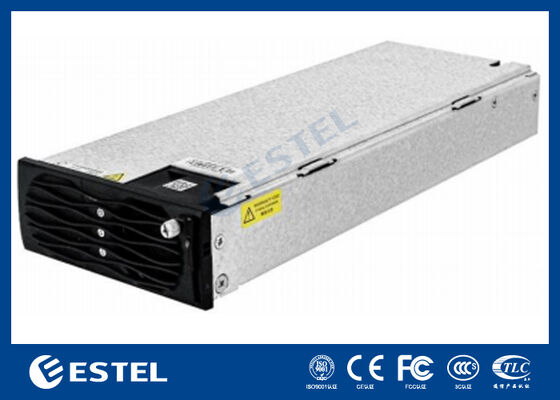
The IP123000G2A communication inverter module is built with three ports: AC input, AC output, and DC input/output. Its core purpose is to maintain a stable AC supply to critical loads by intelligently selecting the available power source:
When utility AC is normal: the module processes the AC supply through rectification and delivers a stable AC output to the load.
When utility AC is unavailable: the module automatically switches to DC input and converts DC power into AC output, ensuring power continuity for essential equipment (switching strategy depends on system configuration).
It complies with relevant electrical standards and industry regulations, and provides network management + intelligent monitoring for modern telecom/ICT infrastructure. It also supports parallel operation of up to 3 modules, enabling capacity expansion and higher availability designs.
Key Features
Automatic AC/DC source transfer: AC-first operation with DC backup inversion when AC fails, reducing downtime risk.
Three-port integrated design: AC input/output and DC input/output in one module—simplifies system integration and maintenance.
Network management & smart monitoring: remote visibility of operating status, alarms, and key parameters (exact items depend on the monitoring protocol and system).
Standards compliance + EMC readiness: designed to meet electrical standards and industry requirements, suitable for telecom-grade deployment.
Up to 3-module parallel operation: supports load sharing and scalable power architecture; can be used for redundancy (e.g., N+1) depending on system design.
Harsh-environment capability: wide temperature/humidity range and altitude adaptability for outdoor sites and edge facilities.
Main Specifications
Environmental Conditions
Operating temperature: -20°C to +75°C (power derating from 45°C to 75°C)
Storage temperature: -40°C to +75°C
Relative humidity: 5% to 95%RH, non-condensing
Altitude: ≤ 4000 m (temperature decreases by 1°C per 200 m elevation as a reference for high-altitude adaptation)
Electrical Input (Single-Phase)
Input mode: TT/TNIT (single-phase input)
Input voltage range: 176 Vac to 265 Vac
Rated input voltage: 220 Vac
Maximum input voltage: 300 Vac
Maximum input current: 22 A
Starting inrush current: ≤ 15 A
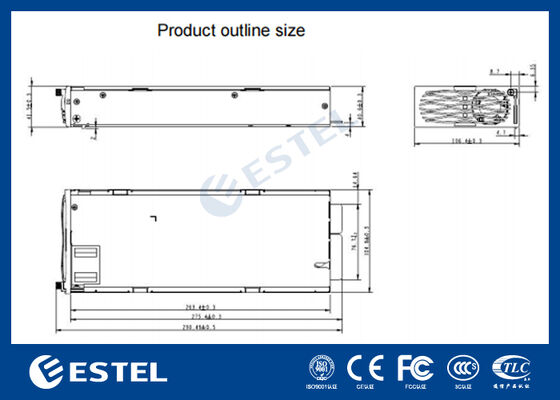
Output ratings (AC output voltage/frequency, DC bus range, efficiency, protections, communication interface type, dimensions, weight, cooling method) should be confirmed by the official datasheet/nameplate.
Typical Application Scenarios
Telecom sites / base stations: ensuring uninterrupted AC supply for transmission equipment, switches, routers, and site controllers.
Network and edge infrastructure: micro data rooms, edge cabinets, distributed nodes—especially where remote monitoring reduces on-site visits.
Private networks & industrial communications: rail transit, public safety/emergency networks, power-utility communications—where continuity and compliance matter.
Battery-backed critical loads: systems using DC battery strings or DC bus for backup power, requiring reliable DC-to-AC conversion during mains outages.
Installation & Parallel Operation (Practical Guidance)
Mounting location: typically installed inside a telecom power rack/cabinet. Ensure adequate ventilation and keep away from direct heat sources and moisture. Use the manufacturer-defined mounting rails/holes and torque specs.
Wiring principles (typical best practice):
Provide compliant protection upstream of AC input (breaker/fuse and grounding).
Connect AC output to the protected load bus or distribution unit.
Connect DC input/output to the DC bus or battery system per polarity and cable sizing requirements.
Use reliable grounding and route monitoring/communication cables with shielding and separation from power cables to reduce EMI.
Parallel operation (up to 3 modules):
Use the same model/version for parallel sets.
Follow the specified parallel/communication wiring and addressing rules (if applicable).
Keep cable lengths and impedance as consistent as possible to support stable load sharing.
Consider redundancy planning (e.g., capacity margin or N+1) based on site criticality.
Operational Notes / Precautions
Derating above 45°C: in hot sites, avoid sustained full-load operation without sufficient airflow; keep filters/heatsinks clean.
Non-condensing humidity requirement: prevent condensation in environments with large temperature swings; consider cabinet heaters/dehumidification if needed.
High altitude considerations: reduced air density impacts cooling; reserve power margin and validate thermal performance near 4000 m.
Grid fluctuation & surge protection: if the supply can approach 300 Vac or is lightning-prone, implement appropriate surge protection and upstream power conditioning.
![]()
![]()
![]()
![]()
![]()
![]()
Osoba kontaktowa: Ms. Fiona Liang
Tel: +8613752765943 / 86-0755 23592644